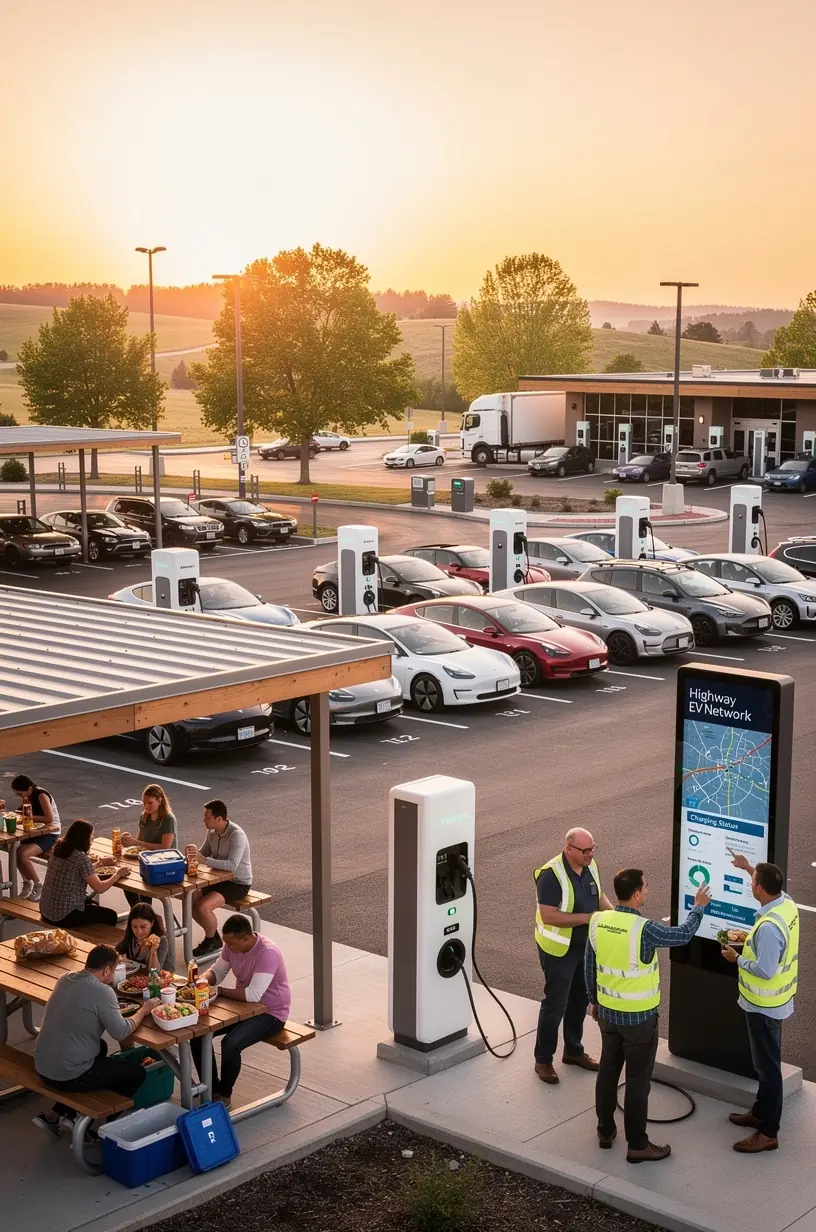
Technical Challenges in Charging Network Scalability
As electric vehicles (EVs) continue to gain traction globally, the need for robust and scalable charging networks becomes increasingly critical. This article delves into the technical challenges associated with scaling these networks and offers insights into how the industry can overcome them.
Understanding Scalability in Charging Networks
Scalability refers to the capability of a system to handle a growing amount of work or its potential to accommodate growth. In the context of EV charging networks, this means ensuring that the infrastructure can meet the rising demand for charging stations as more consumers transition to electric vehicles.

"According to a recent report by the International Energy Agency, the number of electric vehicles on the road could reach 145 million by 2030, highlighting the urgent need for scalable charging solutions."
Key Technical Challenges
Several technical challenges hinder the scalability of EV charging networks:
- Grid Capacity: Many existing electrical grids are not equipped to handle the increased load from widespread EV charging. This issue is particularly pronounced in urban areas where demand spikes during peak hours.
- Charging Speed: As technology evolves, there is a growing demand for faster charging solutions. However, current charging technologies vary significantly in speed and compatibility, complicating the integration of new systems.
- Standardization: The lack of universally accepted standards for charging connectors and protocols creates challenges in ensuring interoperability among different charging stations and vehicles.
- Infrastructure Investment: The need for substantial investment in infrastructure to upgrade existing systems and deploy new charging stations is a significant barrier to scalability.
Strategies for Overcoming Challenges
Addressing these challenges requires a multipronged approach:
- Upgrading Grid Infrastructure: Upgrading local electrical grids to support increased load is essential. This includes integrating renewable energy sources and implementing smart grid technologies that can better manage demand.
- Enhancing Charging Technology: Investing in research and development of faster and more efficient charging technologies can help meet consumer expectations and ease the demand on the grid.
- Promoting Standardization: Industry stakeholders can collaborate to establish common standards for charging infrastructure, ensuring compatibility and interoperability across different systems.
- Policy Support: Governments can play a crucial role in facilitating infrastructure development by providing incentives and regulatory frameworks that support the deployment of EV charging networks.
Conclusion
As the transition to electric vehicles accelerates, addressing the technical challenges related to charging network scalability is imperative. Through collaboration among industry players, technological innovation, and supportive policies, the path toward a sustainable and efficient charging infrastructure can be paved. This effort will not only enhance the user experience but also contribute to the broader goals of reducing emissions and promoting renewable energy use.